PCB technology is very complicated, and there are many problems involved in all aspects. Whether it is the design stage or the production stage, I believe there will be many questions that need to be answered. The following are ten frequently asked questions about PCB circuit board design technology.
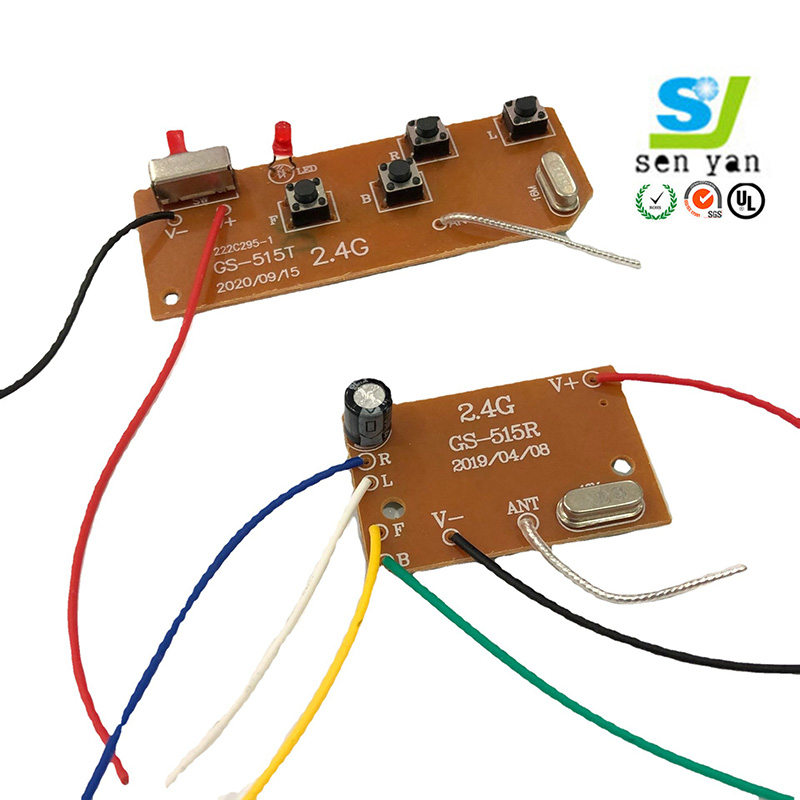
1. When designing a system containing DSP and PLD, from what aspects should ESD be considered?
Answer: As far as the general system is concerned, the parts in direct contact with the human body are mainly considered, and appropriate protection is carried out on the circuit and mechanism. As for how much impact ESD will have on the system, it depends on different situations.
2. In the EMC test, it was found that the harmonics of the clock signal exceeded the standard very seriously, but the decoupling capacitor was only connected to the power pin. What aspects need to be paid attention to in the design to suppress electromagnetic radiation?
Answer: The three elements of EMC are radiation source, propagation path and victim; the propagation path is divided into space radiation propagation and cable conduction. So to suppress harmonics, first look at the way it propagates. Power supply decoupling is to solve the conduction mode propagation, in addition, the necessary matching and shielding are also required.
3. Among the products designed with 4-layer boards, why are some of them paved on the surface and some are not?
Answer: The function of paving: 1, shielding; 2, heat dissipation; 3, reinforcement; 4, processing needs. No matter how many layers of boards are laid, the main reason is to look at it first. Here we mainly discuss high-speed issues. Surface paving is good for EMC, but copper paving should be as complete as possible to avoid islands.
4. For boards with a frequency above 30M, should you use automatic wiring or manual wiring when wiring?
Answer: Automatic or manual routing depends on the support of the software routing function. Some manual routing may be better than automatic routing, but some routing, such as checking distribution routing and bus delay compensation routing, the effect and efficiency of automatic routing will be much higher than manual routing. .
5. In the design, the ground wire is usually divided into protection ground and signal ground; the power ground is divided into digital ground and analo ground. Why should the ground wire be divided?
Answer: The purpose of dividing the ground is mainly for the consideration of EMC, worrying that the noise on the power supply and ground of the digital part will interfere with other signals, especially the analo signal through the conduction path.
No matter how it is divided, there is only one final land.
6. When distributing the clock, is it necessary to add ground wire shielding on both sides?
Answer: Whether to add a shielded ground wire depends on the crosstalk/EMI situation on the board. If the shielded ground wire is not handled properly, it may make the situation worse.
7. What are the countermeasures for deploying clock lines with different frequencies?
Answer: For the wiring of the clock line, it is best to conduct signal integrity analysis, formulate corresponding wiring rules, and perform wiring according to these rules.
8. When manually wiring a single-layer board, how should the jumper be indicated?
Answer: The jumper is a special device in the design. There are only two pads, and the distance can be fixed or variable. It can be added as needed during manual wiring. There will be a direct connection line on the board, and it will also appear in the material list.