There are many standards in the circuit board industry, but how much do you know about the commonly used printed circuit board standards? The following is a summary of the industry standards of 35 circuit board manufacturers for reference: 1. IPC/EIAJEDECJ-STD-003A: Printed Circuit Board Board solderability testing.
2. IPC-M-103: Surface Mount Assembly Manual Standard. This section includes all 21 IPC files pertaining to Surface Mount.
3. IPC-M-04: Printed Circuit Board Assembly Manual Standard. Contains the 10 most widely used documents pertaining to printed circuit board assembly.
4. IPC-DRM-53: Introduction to Electronics Assembly Desktop Reference Manual. Diagrams and photos illustrating through-hole and surface-mount assembly techniques.
5. IPC-6018A: Inspection and testing of microwave finished printed circuit boards. Includes performance and qualification requirements for high frequency (microwave) printed circuit boards. 6. IPC-3406: Guidelines for Coating Adhesives on Conductive Surfaces. Provides guidance for the selection of conductive adhesives as solder alternatives in electronics manufacturing.
7. IPC-Ca-821: General requirements for thermally conductive adhesives. Includes requirements and test methods for thermally conductive dielectrics that bond components in place.
8. IPC-CC-830B: Performance and identification of electronic insulating compounds in printed circuit board assembly. The protective coating meets an industry standard of quality and qualification.
9. IPC-TR-460A: Printed circuit board wave soldering troubleshooting list. A list of recommended corrective actions for failures that may be caused by wave soldering.
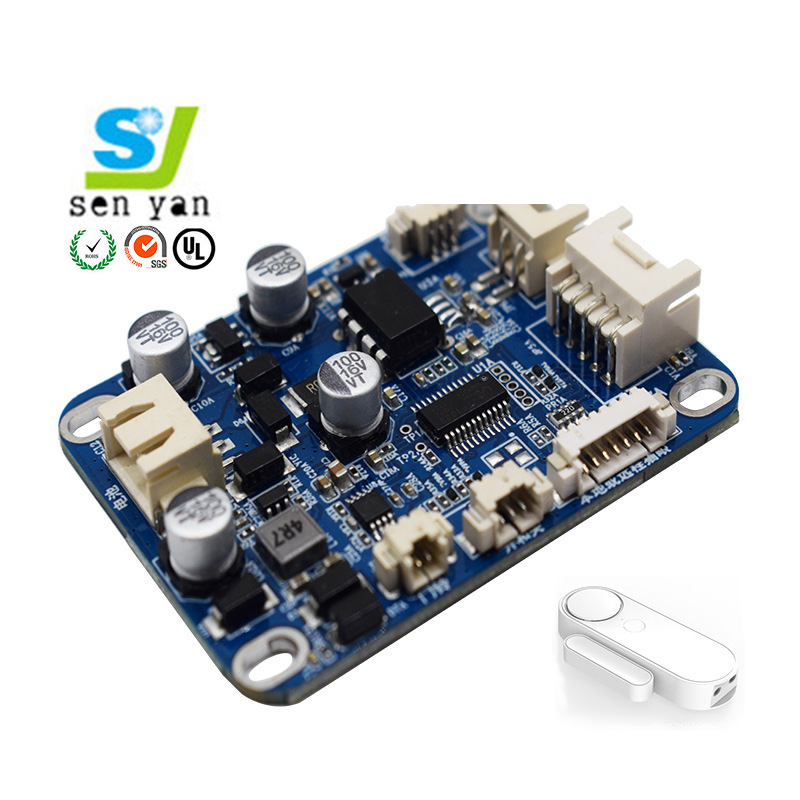
Printed circuit board / circuit board
10. IPC-D-317A: Design guidelines for electronic packaging using high-speed technology. Provides guidance for the design of high-speed circuits, including mechanical and electrical considerations and performance testing.
11. IPC-M-08: Cleaning Instruction Manual. Includes the latest version of the IPC Cleaning Guidelines to assist manufacturing engineers when deciding on cleaning procedures and troubleshooting for their products.
12. IPC-6010: Printed Circuit Board Quality Standards and Performance Specifications Series Manual. Includes the American Printed Circuit Board Association quality standards and performance specification standards for all printed circuit boards.
13. IPC-D-279: Design Guidelines for Reliable Surface Mount Technology Printed Circuit Board Assembly. A guide to the reliability manufacturing process of surface mount technology and mixed technology printed circuit boards, including design thinking.
14. IPC-PE-740A: Troubleshooting in the manufacture and assembly of printed circuit boards. Including case records and corrective activities of problems in the design, manufacture, assembly and testing of printed circuit products.
15. IPC-7530: Guide to temperature curves for batch soldering processes (reflow soldering and wave soldering). Various testing methods, techniques and methods are used in the acquisition of temperature curves to provide guidance for establishing the best graphics.
16. IPC-SA-61A: Semi-aqueous cleaning manual after welding. Covers all aspects of semi-aqueous cleaning, including chemical, process residues, equipment, processes, process controls, and environmental and safety considerations.
17. IPC-9201: Surface Insulation Resistance Manual. Contains the terminology,test process and test means of surface insulation resistance (SIR), also includes temperature, humidity (TH) test, failure mode and troubleshooting.
18. IPC-SC-50A: Solvent cleaning manual after welding. The use of solvent cleaning techniques in automated and manual soldering is presented, and the properties of solvents, residues, and process control and environmental aspects are discussed.
19. IPC-S-816: Surface mount technology process guide and list. This troubleshooting guide lists and resolves all types of process issues encountered in surface mount assembly, including bridging, missing solder, misaligned component placement, and more.
20. IPC-TA-722: Welding Technology Evaluation Manual. Includes 45 articles on all aspects of soldering technology including general soldering, soldering consumables, manual soldering, batch soldering, wave soldering, reflow soldering, vapor phase soldering, and infrared soldering.
21. IPC-AC-62A: Aqueous cleaning manual after welding. Describe manufacturing residues, types and properties of aqueous cleaning agents, aqueous cleaning processes, equipment and processes, quality control, environmental control and employee safety, and cost of measurement and measurement of cleanliness.
22. IPC/EIAJ-STD-005: Specification Requirements for Solder Paste, including Appendix I. The characteristics and technical index requirements of solder paste are listed, as well as the test method and metal content standard, as well as the viscosity, slump, solder ball, viscosity and tin wetting performance of solder.
23. Supplement to IPC-7095.SGA device design and assembly process. Provides a variety of useful operational information for those who are using SGA devices or considering moving to the field of array packaging; provides guidance for SGA inspection and repair and provides reliable information on the SGA field.
24. IPC-9261: Printed circuit board assembly yield estimates and failures per million opportunities during assembly. Defines a reliable method for calculating the number of failures per million opportunities in a printed circuit board assembly run, and is a measure for evaluation at various stages in the assembly process.
25. IPC-ESD-2020: A Joint Standard for the Development of Electrostatic Discharge Control Programs. Includes the design, establishment, implementation and maintenance necessary for an ESD control program. Provides guidance for handling and protection during electrostatic discharge sensitive periods based on historical experience with certain military and commercial organizations.
26. IPC-7129: Calculation of the number of failures per million opportunities (DPMO) and printed circuit board assembly manufacturing indicators. For the calculation of defect and quality-related industry-agreed benchmark indicators; it provides a satisfactory method for calculating the number of failures per million opportunities for benchmark indicators.
27. IPC-2546: Combination requirements for conveying key points in printed circuit board assembly. Describes material movement systems such as actuators and buffers, manual placement, automated screen printing, automated adhesive dispensing, automated surface mount placement, automated plated through hole placement, forced convection, infrared reflow ovens, and wave soldering.
28. IPC-7525: Template Design Guidelines. Provides guidelines for the design and fabrication of solder paste and surface mount adhesive coated stencils. It also discusses stencil design for surface mount technology and describes how to combine components with through-hole or flip-chip components. Techniques, including overprinting, double printing, and staged template design.
29. IPC-DRM-4OE: Desktop Reference Manual for Through Hole Solder Joint Evaluation. Detailed description of components, hole walls, and solder surface coverage as required by the standard, in addition to computer-generated 3D graphics. Covers fillet, contact angle, wetting, vertical fill, pad coverage, and numerous solder joint defect cases.
30. IPC-AJ-820: Assembly and Welding Manual. Contains a description of inspection techniques for assembly and soldering, including terms and definitions; types of printed circuit boards, components and leads, materials for solder joints, component mounting, specification references and outlines for design; soldering techniques and packaging; Cleaning and lamination; quality assurance and testing.
31. IPC/EIAJ-STD-006A: Specification requirements for electronic grade solder alloys, fluxes and non-fluxed solid solders. For electronic grade solder alloys, for rod, ribbon, powder flux and non-flux solder, for the application of electronic solder, provide terminology, specification requirements and test methods for special electronic grade solder.
32. IPC/EIAJ-STD-O4: Specification Requirements for Soldering Flux, including Appendix 1. Contains technical indicators and classifications of rosin, resin, etc., organic and inorganic fluxes classified according to the content and activation degree of halides in the flux; also includes the use of fluxes, flux-containing substances, and low-temperature fluxes used in no-clean processes Residual flux.
33. IPC-CM-770D: Installation Guide for Printed Circuit Board Components. Provides effective guidance for the preparation of components in printed circuit board assembly, and reviews relevant standards, influence, and distribution, including assembly techniques (both manual and automated, as well as surface mount technology and flip-chip assembly techniques) ) and consideration of subsequent soldering, cleaning and coating processes.
34. IPC-CH-65-A: Cleaning Guidelines in Printed Circuit Board Assembly Question #e# 19) IPC-CH-65-A: Cleaning Guidelines in Printed Circuit Board Assembly. Provides a reference for current and emerging cleaning methods in the electronics industry, including a description and discussion of various cleaning methods, explaining the relationship between various materials, processes, and contaminants in manufacturing and assembly operations.
35. J-STD-013: Ball Grid Array Package (SGA) and other high-density technology applications. Establish the specification requirements and interactions required for the printed circuit board packaging process to provide information for high performance and high pin count integrated circuit package interconnections, including design principle information, material selection, board manufacturing and assembly techniques, and test methods and reliability expectations based on the end-use environment.