High frequency board circuit board is a special circuit board with high electromagnetic frequency. Generally speaking, high frequency can be defined as a frequency above 1GHz. Its physical properties, precision, technical parameters
The requirements are very high, and they are often used in automotive anti-collision systems, satellite systems, radio systems and other fields. The price is high, usually around 1.8 per square centimeter, or about 18,000 yuan per square meter.
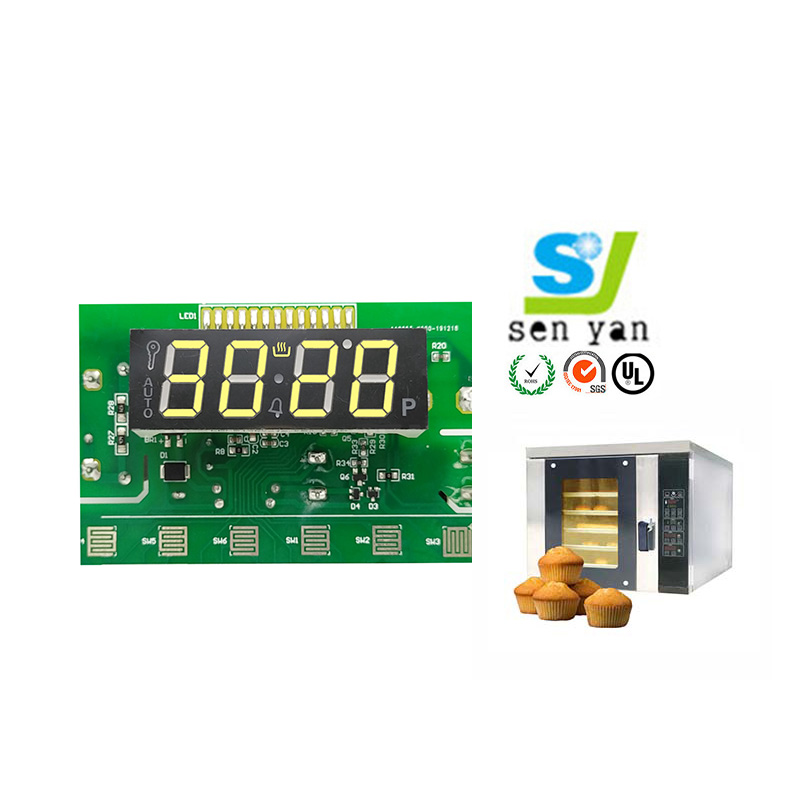
High frequency board circuit board characteristics
1. Do not grind the board before solder masking, otherwise the adhesion will be poor, and you can only roughen it with micro-etching potion.
2. High frequency board The circuit board is a special circuit board with high electromagnetic frequency. Generally speaking, high frequency can be defined as a frequency above 1GHz.
3. The impedance control requirements of the high-frequency board circuit board are relatively strict, and the relative line width control is very strict, and the general tolerance is about 2%. 4. Most of the high-frequency board circuit board boards are made of polytetrafluoroethylene materials. There will be many burrs when formed with ordinary milling cutters, and special milling cutters are required.
5. Due to the special material of the high-frequency board, the adhesion of PTH copper sinking is not high. Usually, it is necessary to use plasma treatment equipment to roughen the via hole and surface first to increase the adhesion of PTH hole copper and solder mask ink. .
Its various physical properties, precision, and technical parameters require very high requirements, and it is often used in automotive anti-collision systems, satellite systems, radio systems and other fields.
Detailed analysis of high frequency board circuit board parameters
The high frequency of electronic equipment is a development trend, especially with the increasing development of wireless networks and satellite communications, information products are moving towards high speed and high frequency, and communication products are moving towards large-capacity and fast-speed wireless transmission of voice, video and data standardization. Therefore, the development of a new generation of products requires high-frequency substrates. Communication products such as satellite systems and mobile phone receiving base stations must use high-frequency circuit boards. In the next few years, they will inevitably develop rapidly, and high-frequency substrates will be in great demand.
① The water absorption of the high-frequency circuit board base material should be low, and the high water absorption will cause the dielectric constant and dielectric loss when it is damp.
②The thermal expansion coefficients of the base material of the high-frequency circuit board and the copper foil must be consistent. If they are not consistent, the copper foil will be separated during the change of cold and heat.
③The dielectric constant (Dk) of the base material of the high-frequency circuit board must be small and stable. Generally speaking, the smaller the better, the signal transmission rate is inversely proportional to the square root of the material dielectric constant, and the high dielectric constant is easy to cause signal transmission. delay.
④ The dielectric loss (Df) of the substrate material of the high-frequency circuit board must be small, which mainly affects the quality of signal transmission. The smaller the dielectric loss, the smaller the signal loss.
⑤ Other heat resistance, chemical resistance, impact strength, peel strength, etc. of the high-frequency circuit board substrate material must also be good. Generally speaking, high frequency can be defined as a frequency above 1GHz. At present, the base material of high-frequency circuit boards is mostly fluorine-based dielectric substrates, such as polytetrafluoroethylene (PTFE), which is usually called Teflon, and is usually used above 5GHz. In addition, there are FR-4 or PPO substrates, which can be used for products between 1GHz and 10GHz.
Among the three types of high-frequency circuit board substrate materials used at this stage, epoxy resin, PPO resin and fluorine-based resin, epoxy resin is the cheapest, while fluorine-based resin is the most expensive; and dielectric constant, dielectric loss, Considering water absorption and frequency characteristics, fluorine-based resins are the best, while epoxy resins are inferior. When the frequency of product application is higher than 10GHz, only fluororesin printed boards are suitable. Obviously, the performance of fluororesin high-frequency substrates is much higher than that of other substrates, but its disadvantages are poor rigidity and high thermal expansion coefficient in addition to high cost. For polytetrafluoroethylene (PTFE), in order to improve performance, a large amount of inorganic substances (such as silicon dioxide SiO2) or glass cloth are used as reinforcing filler materials to increase the rigidity of the substrate and reduce its expansion.
In addition, due to the molecular inertness of PTFE resin itself, it is not easy to bond with copper foil, so special surface treatment is required for the bonded surface with copper foil. The treatment method is chemical etching or plasma etching on the surface of PTFE, increasing the surface roughness or adding an adhesive film layer between the copper foil and the PTFE resin to improve the bonding force, but it may have a negative effect on the dielectric performance. The development of the entire fluorine-based high-frequency board substrate requires the cooperation of raw material suppliers, research institutes, equipment suppliers, PCB manufacturers, and communication product manufacturers in order to keep up with the rapid development of the high-frequency circuit board field. needs.