The reinforcing material is impregnated with resin (prepreg), one or both sides are covered with copper foil, and a plate-shaped material formed by hot pressing is called copper-clad laminate, which is the base material.
There are several aspects that need to be added for the performance index of the substrate: ① Glass transition temperature Tg
When the material is heated to a temperature much higher than its Tg value, it may cause an irreversible phase change, but it does not mean that the temperature reaches the Tg value, an irreversible change will occur, as long as the resin does not decompose, this thermodynamic change is reversible of. In fact, when the temperature is close to the Tg value, the physical properties of the material have changed. As the temperature continues to rise, more and more molecular bonds become weaker, until all bonds begin to undergo physical changes.
Substrates with high Tg values tend to be stiffer and more brittle than substrates with low Tg values. Lower copper peel strength values and shorter delamination test times were also associated with higher Tg values.
High-end FR4 resin systems often have high Tg and high Td values.
Coefficient of thermal expansion (CTE) is divided into X-axis, Y-axis, and Z-axis thermal expansion coefficients. It generally refers to the Z-axis expansion coefficient, because it has the greatest impact on material reliability.
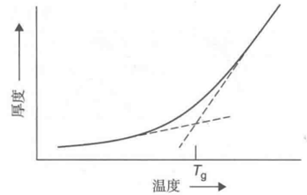
Resin has a relatively high CTE relative to glass cloth or other reinforcement materials.
③Thermal decomposition temperature
With the emergence of lead-free technology, in addition to the glass transition temperature, there is another indicator for substrate selection: thermal decomposition temperature. The resin will start to decompose at a certain temperature point, the chemical bonds in the resin will start to break, volatile components will escape, and the mass will decrease.
Td is usually defined as the temperature point corresponding to the loss of 5% of the original mass in decomposition.
Why consider Td?
It is generally believed that the higher the Tg value, the higher the reliability of the material. However, in the lead-free soldering process, the solder alloy often requires a higher reflow temperature than the lead soldering process, and this temperature may be close to the thermal decomposition temperature of the resin in many substrates, so sometimes Td needs to be considered.
④ Layering time
A specific test shows how long it takes for a material to delaminate or delaminate at a specific temperature. The delamination time is affected by the CTE and different curing agents used in the resin, which reflects the comprehensive ability of the material.
⑤ Copper foil peel strength
Peel strength is a measure of the bonding force between the conductor and the base material. Copper foil thickness will affect the peel strength value of the test, the default is 1oz thick copper.
⑥Water absorption and hygroscopicity
The ability of a material to resist the absorption of water in air or submerged in water. Moisture tends to swell and spread, causing delamination of the substrate. Moisture can also affect the ability of the substrate to grow conductive anodic filaments (CAF).
⑦ Flame retardant
Underwriters Laboratories (UL) classifies the flame retardant properties as 94V-0, 94V-1, 94V-2, etc. UL94 represents the minimu flammability of materials.
⑧Electrical properties Dielectric constant
The dielectric constant of the resin is smaller than that of the glass cloth, and as the resin content increases, the dielectric constant becomes smaller. Loss factor
The loss factor of resin is larger than that of glass cloth, and the loss factor becomes larger as the resin content increases.
The dielectric constant generally decreases with the increase of frequency, and the loss factor generally increases with the increase of frequency, but it will reach the maximum at a certain frequency point. Both dielectric constant and dissipation factor generally increase with water absorption.
In addition to the substrate performance indicators, there are also IPC-410 series standards, IPC-4101 rigid and multilayer printed board substrate specifications, and IPC-4103 high-speed/high-frequency application substrate specifications.
Lead-free assembly involves substrate characteristics
Substances restricted by RoHS: lead (Pb), cadmium (Cd), mercury (Hg), polybrominated biphenyls (PBB), polybrominated diphenyl ethers (PBDE), etc. Lead-free assembly will involve some characteristics of the substrate: